Stinging insect activity in South Florida peaks during the sustained humid months between March and November. In residential zones like Jacaranda Lakes and Mirror Lake Estates, paper wasps frequently colonize roof…
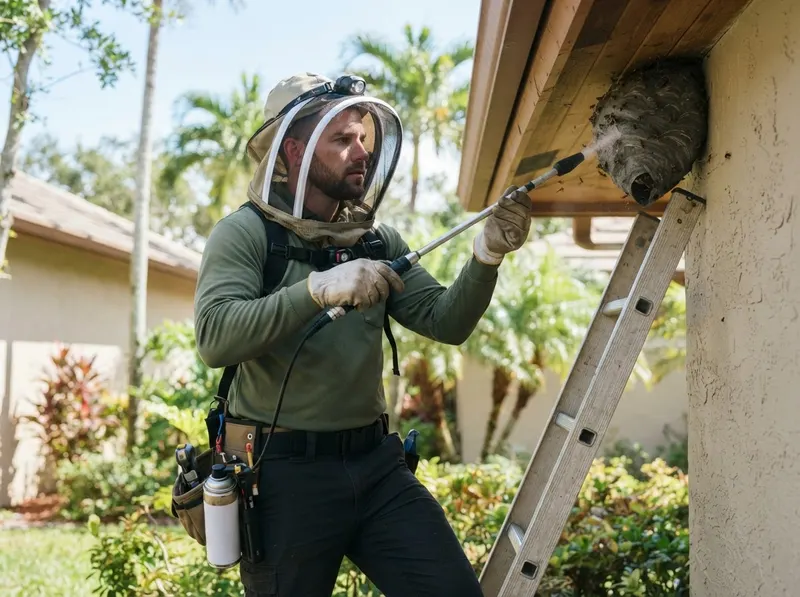
Stinging insect activity in South Florida peaks during the sustained humid months between March and November. In residential zones like Jacaranda Lakes and Mirror Lake Estates, paper wasps frequently colonize roof soffits, patio overhangs, and pool screen enclosures, while aggressive yellowjackets nest within sub-surface soil voids near irrigation lines. In heavily wooded parcels throughout Plantation Acres and El Dorado Estates, European and Africanized honeybees seek hollow tree trunks or void spaces in attic fascia. Homeowners often mistake foraging activity for an established colony; however, observing sustained flight patterns directly into a building crack indicates an internal brood nest requiring immediate, clinical extraction rather than superficial surface sprays.
Selecting professional nest extraction over store-bought pressurized sprays prevents defensive colony swarming and chronic structural damage. Conventional aerosol treatments trigger protective alarm pheromones within yellowjacket and hornet colonies, driving workers deeper into attic drywall or interior wall voids. In contrast, CleanNest Insect Defense executes targeted, low-impact vacuum recovery and physical comb clearance aligned with University of Florida IFAS Extension protocols. When honeybee colonies colonize home siding near Plantation Central Park or Parc Court, simply exterminating the workers leaves dozens of pounds of fermenting honey and brood wax inside the wall. Left unextracted, this material melts under sub-tropical heat, attracting secondary infestations of secondary pests such as roaches and beetles, as recognized by the Florida Department of Agriculture and Consumer Services.
Property construction details directly dictate extraction complexity and pricing. Open-air eave nests at single-story properties in Country Club Lakes require straightforward manual removal and preventive residue application. Conversely, concealed colonies within multi-story barrel tile roofs, common in Hawks Landing and Central Park, demand localized tile lifting, hive deconstruction, and void sanitation. Following complete nest extraction, structural entry points are mechanically fortified using silicone sealants and galvanized wire mesh in accordance with Florida Building Code standards. This structural exclusion seals weep screeds, attic vents, and plumbing penetrations against future seasonal scouting swarms, restoring true peace of mind without chemical panic.
Every job gets a firm, written price after a free on-site visit.
For standards, safe disposal, and service guidance on pest control services in Plantation, FL, useful references include U.S. EPA, ENERGY STAR, U.S. Dept. of Energy, Consumer.gov, U.S. Census Bureau, and Google Maps. General consumer and small-business resources are available from USA.gov, Better Business Bureau, FTC Consumer Advice, U.S. Small Business Administration, and Ready.gov.
Tell us about your wasp & bee removal job in Plantation and we'll send a clear, written quote, usually the same day.
 CleanNest Insect Defense